

Downsizing Your Home? Here’s How to Think It Through
If you’re ready to talk through your situation, you can fill this out and I’ll personally follow up with you.
If you’d rather take a little time first, you’ll find helpful information below—and another place to reach out when you’re ready.
Either way, I’m here to help you think it through.

Most people who reach out to me aren’t sure what to do next. They know something needs to change — but figuring out what, and how, and when feels like more than they can sort through on their own.
That’s exactly where I can help.
I’m Becky Fields — a licensed Texas Realtor and home buyer based in Houston. I’ve helped families think through this decision more times than I can count. And I’ve lived it myself. My husband and I downsized our own home after decades of building a life there.
I know what it feels like to stand in a room full of memories and wonder what comes next.
If you’re trying to figure out what to do with your house as part of downsizing, this page will help you think it through clearly — at your pace, without pressure.
This is more than a real estate decision
A home holds more than walls and a roof.
It holds memories. Milestones. Seasons of life tied to rooms, furniture, and the smallest things tucked away in drawers and closets.
When you start thinking about downsizing, you’re not just deciding what to do with a property. You’re facing questions that go much deeper than square footage or sale price.
What do I do with everything we’ve accumulated? How much work should I put into the house before selling? Do I list it, or sell it as-is? Am I ready for this?
Those questions are real. And they deserve honest answers — not a sales pitch.
For most people, the hardest part isn’t knowing something needs to change. It’s figuring out what to do next. And it’s harder than most people expect — not because the decisions are complicated, but because the emotions underneath them are real.

What most people are really trying to figure out
Underneath all the details, most homeowners are asking one question:
What’s the right way to handle this home at this stage of my life?
The honest answer is: there is no single right way. There is only what fits your life, your timeline, and your peace of mind.
What most people need isn’t more information. It’s clarity on which direction actually makes sense for their situation — and someone willing to be honest with them about what the options really look like.
That’s what I help people find.
Your four options, laid out clearly
There are four paths most homeowners consider. Each one makes sense for a different situation.
Good — Bare minimum Do just enough to make the home presentable. Deep cleaning, safety concerns addressed, listed as-is. Right for people who want to move forward without taking on a project.
Better — Polish without remodeling Light repairs, paint touch-ups, cleaning and decluttering. Can attract more buyers and improve offers without the stress of a major renovation.
Best — Full renovation Update major systems, renovate kitchens and bathrooms, new flooring and finishes. Brings the highest price — but requires the most time, money, and coordination. You also run the risk of over-investing if the market doesn’t reward what you put in.
Sell to Grandma — Cash offer, as-is No repairs, no showings, no waiting on buyers. You sell the house exactly as it sits, on a timeline that works for you. The price will be lower than a polished listing — but what you trade in dollars you often gain back in simplicity, speed, and peace of mind.
If you’d like to understand exactly what working with me looks like — from the first call to the day you decide — here’s how the process works.
For a side-by-side look at how these four paths compare on cost, time, and stress, the Your Options page walks through each one in plain language.
What do you do with everything
For many people, this is the hardest part of downsizing — and the one nobody talks about enough.
A lifetime of belongings doesn’t fit neatly into a smaller space. Every item carries some level of meaning. Decisions that look simple on paper feel heavy in practice.
I remember going through this myself. I had collected things for decades — things that mattered, things that had stories attached to them. And at some point, I had to ask myself a hard question: what’s more important — the storage space these things are taking up in my house, or the freedom of not having to manage them anymore?
One of the hardest moments was letting go of my mother’s baby grand piano. I knew I wouldn’t have room for it. I knew it had to go. And I also knew it wasn’t just a piano. It was decades of memory in a single object. That kind of decision doesn’t have a formula.

Europe before landing in a Houston living room — and then faced a new journey.
What I learned — personally and from walking alongside hundreds of families — is that you don’t have to figure it all out at once. Downsizing isn’t a single decision. It’s a series of smaller ones, made over time. Some things will be easy to let go of. Some will take longer. And some need to be handled with care, not speed.
The goal isn’t to empty a house. It’s to make room for what comes next.
The family side of this decision
Downsizing rarely involves just one person’s opinion.
Adult children, spouses, siblings — everyone who loved the home has a perspective. And even when everyone means well, those perspectives don’t always align.
One adult child wants to move things along. Another isn’t ready. A spouse isn’t sure they want to leave at all. And sometimes the parent making the decision is caught between honoring what they want and managing what everyone else expects.
I’ve seen this dynamic more times than I can count. What I’ve learned is that clear, early conversations make an enormous difference — not to force agreement, but to make sure everyone understands what’s actually being decided and why.
There are also situations where adult children are managing this on behalf of a parent who can no longer manage it themselves. Maybe the parent is showing early signs of dementia. Maybe they can’t tell you where their important documents are, or what they’d want done with things that matter to them. Those situations carry a particular weight — and they’re more common than most families expect.
Whoever is in the middle of this — the homeowner, the adult child, the spouse trying to hold things together — you’re not alone in finding it complicated. The family part of downsizing is often harder than the real estate part.

When the timeline isn’t yours to choose

Grandma
House Buyer
Sometimes this decision doesn’t unfold gradually. Sometimes it changes overnight.
A fall. A hospital stay. A diagnosis. A sudden change in mobility. A medical event that means your mother or father needs to move into assisted living — immediately. And now there’s a house that needs decisions, and adult children spread across different cities with limited time to make them.
In those moments, what once felt like something you could think through slowly becomes something that needs clarity right now.
This is one of the things I encourage people to think about before the crisis arrives. If you can start downsizing now — while you’re feeling good, while you have time, while the decisions don’t carry emergency weight — you give yourself something valuable. You give yourself the ability to think clearly.
Because I’ve been around people who will push in these moments. Who will try to get someone to sign on the dotted line at a time when they’re not in a position to make permanent decisions carefully… That’s not how I operate. I know how these situations feel from the inside. And I know that sometimes it takes a while to process — and that’s not only okay, it’s right.
If you’re already in a crisis situation, the most important thing to know is that you still have options. And you don’t have to figure out which one fits before you’re ready.
The emotional side of letting go
Even when downsizing makes complete practical sense, it doesn’t always feel easy.
I remember when the idea of moving to a smaller house was something I knew was coming — something I could see on the horizon — and still didn’t want to think about. I knew it was the right direction. I just wasn’t ready to face it yet.
That feeling is more common than most people admit. And it’s worth naming, because it’s not weakness — it’s honesty about what a home actually means.
Letting go of a home can feel like closing a chapter of life. There are memories in the walls. Seasons tied to rooms that no longer exist the same way they did. A backyard where children played. A kitchen where the family gathered. A bedroom where someone you loved spent their last years.
That’s not something you rush past. It’s something you move through — at your own pace, with as much grace as you can give yourself.
What I’ve found, both personally and in working with families, is that the emotional readiness and the practical decisions don’t always arrive at the same time. And that’s okay. You’re allowed to know what the right decision is before you’re ready to make it.

Hear it from Becky directly
Sometimes it helps to hear this in someone’s own words rather than read it on a page.
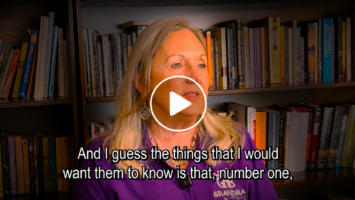
What makes downsizing harder than it has to be
Over the years, I’ve noticed a few patterns that make this harder than it needs to be.
Trying to do too much. Taking on a full renovation when it isn’t necessary leads to stress, delays, and costs that don’t always come back at closing. Sometimes simpler really is better.
Waiting too long. It’s easy to put this off. But over time, things rarely get easier — they just get heavier. The best time to start thinking about this is before the urgency arrives.
Underestimating what’s involved. Sorting through belongings and preparing a home takes more time and energy than most people expect — especially when emotions are involved. Give yourself more runway than you think you need.
Letting family miscommunication create tension. When everyone isn’t on the same page, small decisions become bigger frustrations. Clear, early conversations make a real difference.
Assuming there’s only one right way. There isn’t. There are many different solutions, and not everyone fits into the same one. The best path is the one that fits your life and your priorities — not someone else’s expectations.
Avoiding these doesn’t make the process easy. But it makes it more manageable.
How I approach this differently
Every little piece of my life seemed to be pointing toward this work — I just didn’t see it while I was going through it.
I cared for my mother. I cared for my father. I cared for my mother-in-law through her illness until the end. I raised seven children. I walked through seasons of loss and transition more than once. And more recently, my husband and I downsized our own home after decades of building a life there.
Those experiences didn’t just give me professional knowledge. They gave me something harder to teach — an understanding of what families actually feel when they’re in the middle of this. The overwhelm. The grief underneath practical decisions. The pressure that can come from people who want you to move faster than you’re ready to move.
I’ve been in the investment world long enough to know how people in vulnerable situations get pushed. I’ve seen it happen. That’s not how I work. My goal is never to move you toward a decision — it’s to help you find the right one for your situation, at a pace that actually serves you.
When people reach out to me, they’re usually going through something hard. What they need is someone who understands. Someone who’s walked it before. Someone who’s experienced the emotions they’re feeling right now.
It helps when you’ve walked this path before…

Kathy: “…She walked us through the process and gave me choices of when to do what. This gave me the confidence I needed to go ahead with our move. It was one of the most important decisions of my life, and I was glad to share it with Becky.”
Joe & Kathy B, Katy, Texas
Common questions about downsizing
Do I need to fix up my house before selling? Not always. It depends on your goals, your timeline, and the condition of the home. Some situations call for updates. Others are better served by keeping things simple. The right answer depends entirely on your situation.
How long does downsizing usually take? It varies widely. Some people move quickly. Others take months to work through belongings and decisions. There’s no required pace — and rushing usually costs more than it saves.
What if the house needs a lot of repairs? You can still sell it. The question is whether you want to invest in those repairs yourself or choose a path that doesn’t require them. Both are legitimate options depending on what matters most to you.
Is selling as-is a good option? For many people, yes — especially when the goal is to reduce stress and move forward with more certainty. The trade-off is a lower sale price. Whether that trade-off makes sense depends entirely on your priorities.
What if not everyone in the family agrees? That’s one of the most common situations I work with. The goal isn’t to force agreement — it’s to help everyone understand what the options actually are so the conversation can move forward. Sometimes just having that clarity changes everything.
What should I do first? Start by understanding your options clearly. That’s almost always the best place to begin — before any decisions, before any commitments, before anything is set in motion.
Ready to talk it through?
If you’d like to think through what to do with your house, I’m happy to have that conversation — at your pace, with no obligation.
Fill out the form below, and I’ll follow up personally. Or if you’d rather start with a phone call, you can reach me directly at 346-598-2424.

As a licensed Texas Realtor and home buyer, I can help you explore all your options and decide what makes the most sense for your situation — whether that means listing, updating, or keeping things simple.