
Should You Fix Up Your House Before You Sell It?
Not sure where to start? You’re not alone. Most homeowners facing this decision have gotten conflicting advice and aren’t sure who to trust.
I can walk you through all four options — honestly, without pressure — so you can make the choice that fits your life right now.
Fill out the form and I’ll follow up personally. Or scroll down and read through it first. Either way, I’m here when you’re ready.
“Should I fix up my house?” Most people asking this question have already gotten at least two opinions. And those opinions disagreed with each other. A neighbor says to update the kitchen. A family member says, “Don’t spend a dime.” Someone online says sell as-is. Someone else says you’re leaving money on the table if you do.
I’ve been in real estate for a long time, and I’ve heard every version of this conversation. I’ve also lived it. When my husband and I downsized our own home after 45 years of marriage, something clicked for me — not as a gradual professional development, but as a genuine discovery. A simpler way to think about a decision that overwhelms most people. It’s the framework I now use with every client facing this question.
The house isn’t just property. It’s decades of living and an integral part of your life’s story. Figuring out what to do with it — how much to spend, how much to fix, whether to even bother — is genuinely complicated. And wrought with emotion.
So before we get into the practical options, I want to say this: there is no single right answer. Anyone who tells you otherwise is probably not thinking about your situation. They’re thinking about a situation.
I’ll also say this: I’m not here to steer you toward any particular path. A lot of people in this industry use pressure tactics to push homeowners toward a quick decision. That’s not how I operate. My goal is to give you honest information and let you make the right call for your own life.
What I can do is lay out the paths clearly. All of them. Honestly. And let you decide which one fits your life right now.

The question isn’t whether to fix it
When homeowners come to me, uncertain about what to do, the conversation usually starts in the wrong place. They’re asking whether to renovate—when the better question is: what do you actually need from this sale?
Do you need the maximum price, and are you willing to invest several months and real money to get it? Or do you need it to be done—cleanly, quickly, with as little disruption as possible? Or are you somewhere in the middle, willing to do some work but not ready to take on a major project?
The answer shapes everything. It determines what you spend, how long you wait, how much stress you take on, and what your life looks like on the other side of this.
I’ve thought about this a lot—for my clients and for myself. What I’ve landed on is a simple framework with four distinct paths. I call them Good, Better, Best, and Sell to Investor. Each one makes sense for someone. None of them is right for everyone.
Your four options laid out clearly

Good — The bare minimum approach
This is for homeowners who want to do just enough to get the house on the market without pouring time, money, or energy into updates that may never pay off. You deep clean, handle any obvious safety repairs, tidy up the exterior, and list the home honestly—using terms like “as-is” or “fixer-upper” to set clear expectations.
The costs are low. The disruption is minimal. You don’t have contractors coming and going, and you’re not living in a construction zone for months. You move at your own pace.
The tradeoff is that most offers will come from investors or buyers looking for a project. The pool is smaller, and the offers tend to reflect that. If the home needs substantial work, it may also sit on the market longer than you’d like—and carrying costs add up while you wait.

Better — Polish without remodeling
This path is for homeowners willing to do more than the bare minimum but who aren’t ready for a full renovation. The goal is simple: help the house show well and feel cared for without sinking money into major upgrades that may not return their cost.
Think of it as polishing what you already have, not reinventing the house. Power washing the exterior. Deep cleaning everything. Touching up paint, fixing small things that rattle or drip, shampooing carpets. These are meaningful improvements that tend to attract a broader pool of buyers and stronger offers—without the time, expense, or stress of a full remodel.
The caution here is that this is also where homeowners tend to drift. They start with Better and slowly slide into Best—spending money on updates that feel necessary but don’t always add value. If you find yourself on that slope, it may be worth pausing to reassess.
Best — Full renovation, highest price, highest cost
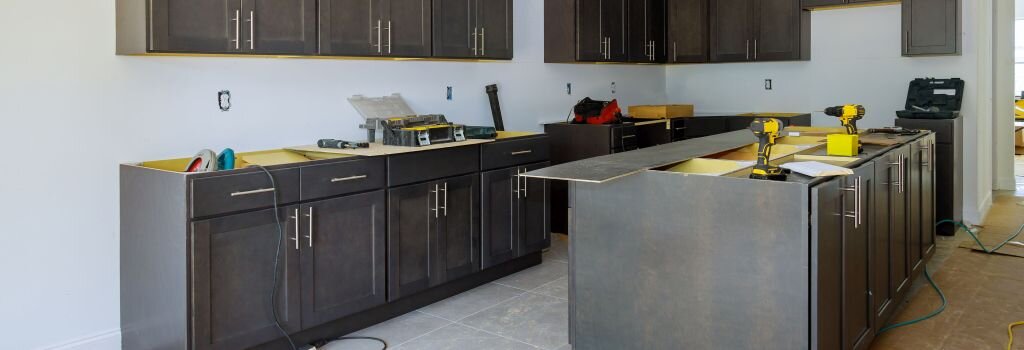
A full remodel can absolutely pay off in the right situation. But it’s important to go in with clear eyes. This is not a light refresh. It’s a full commitment of time, money, energy, and management—roof, HVAC, kitchen, bathrooms, flooring, electrical, plumbing, paint, landscaping. The works.
When everything goes right, you reach the largest pool of buyers, attract traditional mortgage financing, and may achieve the highest price the market will support. That’s real. But it’s also genuinely hard. Contractors don’t always show up. Budgets run over. Inspections uncover things you didn’t plan for. And you can be months into a renovation—carrying taxes, insurance, and utilities the whole time—before the house ever hits the market.
For homeowners who have the time, resources, and energy, this path can work. But I’ve seen it overwhelm people who underestimated what they were taking on. Especially when the project falls on top of an already full life.

Sell to Investor — Speed, simplicity, certainty
This option removes the entire preparation process. No repairs, no cleaning out, no staging, no showings, no waiting on buyers to secure financing. You sell the house exactly as it sits, on a timeline that works for you.
The price will be lower than what you might achieve with a polished listing. That’s honest and worth saying plainly. What you trade in dollars, you gain in time, certainty, and peace of mind. No Realtor commissions, no closing surprises, no months of uncertainty.
For the right situation, it’s not a compromise—it’s the smartest choice available.
Which path actually fits your situation?
Every option has real trade-offs. This table puts them side by side so you can see at a glance what each path costs you — in money, time, and peace of mind.
| Factor | Good Minimal prep & list | Better Polish & list | Best Full renovation & list | No repairs needed Sell to Grandma Cash offer, as-is |
|---|---|---|---|---|
| Repairs needed |
⚠️
Safety issues only
|
⚠️
Minor fixes & cosmetic
|
✖
Full reno — $20k–$60k+
|
✔
None whatsoever
|
| Out-of-pocket cost |
Low
~$500–$2k |
Moderate
~$3k–$10k |
✖
High
~$20k–$60k+ |
✔
$0
|
| Commissions & fees | ~5–6% |
~5–6% |
~5–6% |
✔
$0
|
| Closing costs | ~2% (you pay) |
~2% (you pay) |
~2% (you pay) |
✔
We pay them
|
| Time to close | 60–90+ days |
60–90+ days |
✖
90–180+ days
|
✔
As little as 7 days
|
| Strangers in your home | Many showings |
Many showings |
Contractors + showings |
✔
Just us — once
|
| Risk sale falls through |
⚠️
Financing & inspection risk
|
⚠️
Financing & inspection risk
|
✖
High — longer exposure
|
✔
Very low — cash, no bank
|
| Stress & disruption | Medium |
Medium–High |
✖
Very high
|
✔
Low
|
| You choose closing date |
✖
Buyer’s timeline
|
✖
Buyer’s timeline
|
✖
Buyer’s timeline
|
✔
Your date, your pace
|
| Best for… | Decent condition, limited budget, willing to wait |
Good condition, some energy to invest, want more buyers |
Strong condition, time & money to spare, want top dollar |
Inherited home, downsizing, foreclosure, or just done with the stress |
|
Get My Cash Offer
No pressure. No obligation. Just a clear conversation. |
* The cash offer price will be lower than a top-dollar listing. What you trade in price you gain in time, certainty, and peace of mind — and for many people in this season of life, that’s the better deal. Becky will walk you through both numbers honestly so you can decide what fits.

Start with clarity before making a decision
If you’re not sure what to do with the house, this will help you think it through.
Takes about 5 minutes. No pressure, just clarity.

What most people underestimate
When homeowners think about renovating before they sell, they tend to focus on the upside. What could the house be worth if we updated the kitchen? What would new flooring do for the price?
Those are reasonable questions. But they’re only half of the picture.
The other half is what it actually costs to get there—not just in money, but in time, stress, and the hidden carrying costs that accumulate while a renovation is underway. Every month the house sits under construction is another month of property taxes, insurance, utilities, and maintenance. And that’s before accounting for the gap between what a renovation costs and how much of that cost the market actually returns.
For many homes—especially in established neighborhoods where comps have a ceiling—the math doesn’t work out the way people expect. You spend $40,000 on a kitchen and the market rewards you with $20,000 in added value. That’s not a failure of effort. That’s just how it works.
And then there’s the emotional toll, which is harder to quantify but very real. Managing contractors, making consequential decisions quickly, living with disruption, handling delays—it wears on people. For seniors especially, or for families managing this from a distance, the weight of a major renovation can far outweigh the financial benefit of a higher sale price.

The option people overlook
I want to spend a moment on this one, because it tends to get dismissed as a last resort. It isn’t.
When you sell directly to an investor, the house doesn’t need to be updated, cleaned out, staged, or repaired. There are no showings, no inspections to negotiate, no waiting to find out whether a buyer’s financing came through. You choose the closing date. The process is straightforward.
Yes, the price is typically lower than what you’d net from a fully prepared listing. That’s the tradeoff, and I’m not going to pretend otherwise. But the calculation isn’t just price versus price. It’s also about what you’re buying with the difference—and sometimes what you’re buying is months of your life back. Certainty. The ability to move forward on your own terms.
Sometimes the greatest value isn’t squeezing out every last dollar. It’s choosing simplicity, certainty, and peace of mind.
This option tends to make the most sense for homeowners who are tired of managing the property, need to move quickly, are dealing with health changes or a family member’s needs, or simply don’t want to take on the stress of coordinating a long process. It’s a legitimate choice for the right situation—not a fallback.

A word about the emotional side
Selling a home you’ve lived in for decades isn’t just a financial decision. It’s also the end of something. The house held your daily life—meals, holidays, children growing up, ordinary Tuesday mornings that you didn’t know you’d remember. Letting go of it carries weight that doesn’t show up in any spreadsheet.
I know this because I’ve been through it myself, and I’ve sat at a lot of kitchen tables with people going through it too. What I’ve seen is that the decision about what to do with the house—how much to fix, how fast to move, which path to take—is often clearest when people give themselves permission to choose what actually fits their life. Not what someone else thinks they should do. Not what would theoretically maximize the number. What actually fits.
Your home has already done its job. It sheltered your family. It carried your memories. It doesn’t need to be perfect to be worthy of respect—and neither does your decision about what to do with it next.
Where to go from here
If you’d like to look at your options more clearly, I put together a free booklet called Preparing a Well-Loved Home for Its Next Chapter that walks through all four paths in plain language—what each one involves, what it costs, and who it tends to be right for. You can find it at /what-to-fix.
If you’d rather just talk it through, I’m happy to do that—no pressure, no obligation. Every situation is different, and sometimes the most helpful thing is just a conversation with someone who has thought carefully about this and isn’t trying to sell you anything.
You can reach me at grandmahousebuyer.com or call or text me 346-598-2424.


Grandma House Buyer