
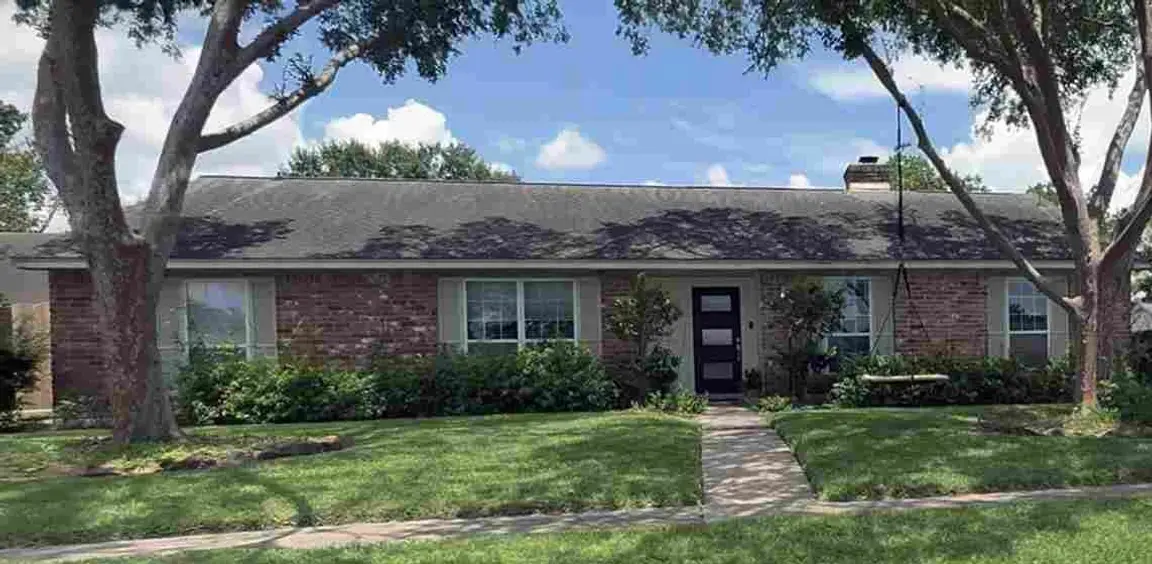
Someone you loved died. And now there’s a house.
Maybe it was expected. Maybe it wasn’t. Either way, you’re being asked to make a financial decision in the middle of grief, and nobody gave you a manual for that.
The house might be in good shape. It might be full of forty years of belongings, or damage that never got fixed, or both. There might be a mortgage still on it, or an HOA sending letters, or siblings who don’t agree on what to do next. There might be a will, or there might not be.
Whatever the situation is, you don’t have to figure it out alone — and you don’t have to decide anything today.
My name is Becky Fields. I’m a licensed Texas Realtor and a cash home buyer based in Houston. I work with families who’ve inherited properties — as an investor who can buy the house directly, or as an agent who can list it on the market. That means I can show you every option and help you decide what actually makes sense — not just the one that’s best for me.
What most families are dealing with when they call me
I’ve walked into a lot of inherited houses in Houston. Some are in perfect condition — a parent who kept everything up, a house that’s ready to show. But those aren’t usually the ones where families need the most help.
More often, I walk in and the house tells its own story. A parent who held on too long. Deferred repairs that added up. A lifetime of belongings that nobody knew what to do with. Sometimes a storm did damage that never got fixed. Sometimes there are two cars in the driveway with no titles, and a stack of HOA letters on the counter.
The daughter or son standing next to me usually says one of three things:
- “I had no idea it was this bad.”
- “There’s so much stuff I don’t even know where to begin.”
- “I think I can fix it up myself.”
That third one is the one I’m most careful about. Because it’s usually not wrong — they probably could fix it up. The question is whether the time, money, and emotional weight of doing it makes sense compared to the other paths available.
That’s the conversation I’m here to have.
The house that’s been waiting two years
I want to tell you about a family I’ve been working with for a while — I’ll call her Vanessa to keep her privacy.
Vanessa’s mother had been in hospice for about five months before she passed. The house was in a nice part of Houston — good neighborhood, good location. But her mother had been a hoarder, and a storm had done damage to the house that never got repaired. There was a hole in the ceiling. The upstairs balcony was falling apart. The house had become overrun with mice and roaches before an exterminator got things under control.
When I arrived, Vanessa met me at the door and asked me to put on a mask and foot covers before I came in. She was embarrassed before I even stepped inside. She said the house wasn’t in any condition to show — and I told her I’d seen worse, which was not entirely true. It was the worst I’d seen.
We walked through together, stepping over things, unable to get to the back door. In the backyard, which backs up to water, little boats go by. The neighbors can see the yard. She’d been getting letters from the HOA. She was paying someone to mow the front, but the back was another story.
There were two cars parked in the driveway. Neither one ran. She couldn’t find the titles. She couldn’t find the paperwork for the house either. She wasn’t sure where anything was.
I made her an offer. A fair number for the house exactly as it sat — cars, contents, damage, and all. She could walk out and never deal with any of it again.
That was almost two years ago. She still hasn’t sold.

Vanessa has a sister who lives out of state. The sister wants to sell. But Vanessa keeps thinking she can fix it up herself, or that her son — who just graduated from college — can do it. She’s not ready to let go, and no number I give her changes that. So I call her every few months and ask if she’s ready. Someday she will be. I’ll be here.
What she doesn’t realize is that the value of that house is going down with time, not up. She’s not going to get more for it than what I offered two years ago. The trust is paying the utilities to keep the air running. But the house is waiting, and waiting costs money.
I’m not telling this story to push anyone into a decision. I’m telling it because it’s the most honest picture I can give you of what “frozen” looks like — and how common it is. Grieving families get stuck. That’s not a flaw. It’s human. But there’s a difference between taking time you need and losing value you can’t get back.
Your four options, laid out plainly
Most families have the same four paths when they inherit a house. Here’s what each one actually means:
| Option | Best when… | Watch out for… | Timeline |
| Sell as-is to a cash buyer | House needs work, heirs want a clean exit, probate is done or nearly done | Offers will be lower than retail — that gap is the cost of speed and certainty | As fast as 2–3 weeks after title is clear |
| List on the open market | House is in good shape, heirs aren’t in a hurry, want to maximize price | Repairs, showings, commissions, and a buyer who may still back out | 3–6 months is typical in Houston |
| Rent it out | Heirs need time; the estate is unsettled, and emotions are still raw | Landlording is a job. Deferred maintenance becomes the next family’s problem. | Ongoing — not a clean exit |
| Hold and decide later | Heirs need time; the estate is unsettled, emotions are still raw | Carrying costs — taxes, insurance, utilities — add up fast. The house doesn’t wait. | Every month costs money |
There’s no universally right answer. The right answer depends on the condition of the house, whether there’s a mortgage, how many heirs are involved, and how much bandwidth your family has for a longer process. I can walk you through the math on any of these.

When the family can’t agree
This is the part nobody talks about. The house is often the least complicated thing in an inherited property situation. The family dynamics are the hard part.
I’ve seen siblings who couldn’t speak to each other for months. I’ve seen families where one person wanted to honor their parent’s wish to keep the house, and another who needed the money and couldn’t wait. I’ve seen a situation where fifteen heirs had to agree on a single decision — and if you’ve ever tried to get fifteen people to agree on anything, you understand why that house took years to sell.

One situation I think about often: a mother set up her estate with an attorney’s help and put her properties in a trust. She wanted her daughters to keep the houses and rent them. She wrote it into the will that if they sold, the proceeds would go to charity. Neither daughter wanted to be a landlord. Neither daughter could sell without losing everything to charity. One daughter was so angry about it that she didn’t come to the funeral.
That attorney thought he was protecting the estate. What he actually did was leave two daughters in an impossible situation — grieving, at odds with each other, and legally stuck.
This is why I talk about estate planning in my book. The best gift you can give your children isn’t a fully paid-off house. It’s a clear roadmap — decisions made while you’re alive and able to make them, documented in a way that doesn’t burden the people you love.
If your family is in disagreement right now, the first step isn’t legal action. It’s a conversation — ideally one where someone neutral helps everyone understand what the actual options are and what each path costs. I’ve been that person for a lot of families. I’m not a mediator or an attorney, but I can lay out the facts in a way that sometimes helps people move forward.
Probate, title, and the legal side — explained simply
You don’t need to become an expert in Texas probate law. But you do need to understand a few things before you can sell.
Does the house have to go through probate?
It depends on how the property was held. If it was in a living trust or had a transfer-on-death deed, you may be able to skip probate entirely. If there was a will, probate establishes who has legal authority to sign. If there was no will, Texas intestacy law determines who the heirs are. In some smaller estates, Texas allows an affidavit of heirship — a simpler path than full probate.
An estate attorney can tell you exactly where you stand in about an hour. If you don’t have one, I can connect you with someone I trust.
Who has the authority to sell?
If there’s a will, usually the executor. If there are multiple heirs, all parties typically need to agree and sign. This is why sibling disagreements can literally stop a sale — one person can hold things up legally, not just emotionally.

What about title issues?
Old liens, unpaid taxes, unclear ownership — these come up more often in inherited properties than in typical sales. A title company will run a search and flag anything that needs to be resolved before the sale can close. It’s not unusual, and it’s fixable. It just takes time.
A word about shopping investors for the highest offer
I understand why families do this. You’ve inherited something valuable and you want to make sure you’re not leaving money on the table. That’s reasonable.
Here’s what I’ve seen happen. A family I know — I’ll call him Ronald — was selling his stepmother’s house with his brothers. The house was older, needed updating, and was in an area that had flooded before (though that specific house hadn’t). An investor offered them $205,000.
I looked at the same house and told Ronald I couldn’t get close to that number. I told him if that investor was real, he should take it.
The investor was from out of town. He didn’t know the Houston market. He’d quoted high to win the contract, then couldn’t find a buyer to wholesale it to. Right before closing, he came back and said he’d have to drop the price by $20,000 — down to $185,000. Ronald called me. I told him if the investor would close at $185,000, that was still above my number and he should take it.
The investor never followed through. The contract fell apart.
My number is the number I can close on. It may be lower than what someone else promises. But I don’t lower it at the finish line. If another offer is genuinely better and the buyer can actually perform, I’ll tell you to take it — and I mean that.
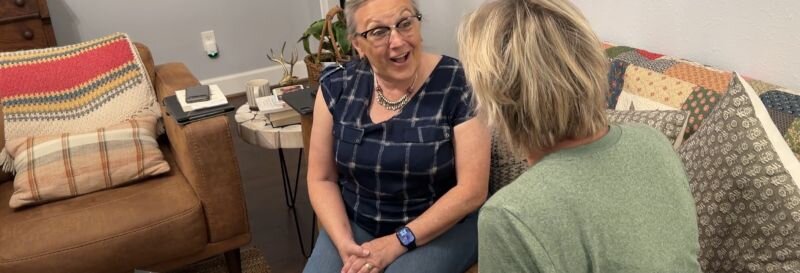
How I actually work
I’m a licensed Texas Realtor and a cash buyer. That combination is less common than it sounds, and it matters for inherited property situations because your options are rarely just one thing.
- If you want a fast, clean exit with no repairs and no showings, I can buy the house directly. As-is, contents and all if needed. Closing happens at a title company — they handle the paperwork, and they’ll split the proceeds among heirs if there are multiple. There’s no dramatic handoff. It’s just done.
- If the house is in good shape and your family wants to maximize the sale price and has time to do it, listing on the MLS is the right call. I can help with that too.
- If you’re not sure which makes more sense, I’ll run the numbers on both and show you the difference. Sometimes the gap between an as-is cash offer and a net listing price — after repairs, commissions, and carrying costs — is smaller than people expect.
I don’t charge for the conversation. I don’t pressure anyone into a decision. And I don’t have one path I’m trying to push you toward — I have the one that’s right for your situation.
Start with clarity before making a decision.
See the Simple Guide
Takes about 5 minutes.
No pressure, just clarity.
Common questions about inherited property in Houston
| Does the house have to go through probate before I can sell it? |
| It depends on how the property was held. If it was in a living trust or had a transfer-on-death deed, you may be able to skip probate entirely. If there was a will, probate establishes who has legal authority to sign. If there was no will, Texas intestacy law determines heirs. An estate attorney can tell you exactly where you stand — and I can connect you with one if you need it. |
| What if all the heirs can’t agree on what to do? |
| This is one of the most common situations I see, and one of the hardest. If one heir wants to sell and another doesn’t, there’s no simple fix. A partition lawsuit is the legal path of last resort — a court can force a sale — but it’s expensive and takes years and damages family relationships. The better path is usually one heir buying the others out, or everyone agreeing on a neutral exit like a cash sale where the proceeds are split cleanly. I’ve helped families navigate this. It starts with a conversation, not a contract. |
| Will I owe taxes when I sell an inherited house? |
| Texas has no state inheritance tax. At the federal level, when you inherit a property, your cost basis is stepped up to the value at the date of death — which means if you sell it soon after inheriting, you may owe little or no capital gains tax. The longer you wait, the more the value can diverge from that stepped-up basis. Talk to a CPA before you sell — this is worth a one-hour conversation. |
| What if the house is full of stuff? Do I have to clean it out before selling? |
| Not if you sell to me. I buy houses as-is — contents and all. Estate sales, donation runs, and cleanout crews are options if you want to recover value from belongings, but they’re not required. A lot of families find that trying to sort everything themselves costs more in time and emotional energy than it’s worth. You can take what matters and leave the rest. |
| How fast can this actually happen? |
| Once the title is clear and the estate has authority to sell, a cash sale can close in two to three weeks. The closing happens at a title company — they handle all the paperwork, and they’ll send checks directly to each heir if there are multiple. There’s no dramatic handoff moment. It’s just done, and you can move on. |
| What if I’ve already gotten a higher offer from another investor? |
| Take it — if it’s real. I’ve told people this to their face. Some investors quote high to get a contract signed, then lower the number right before closing when the seller has run out of options. That’s called a price reduction, and it’s more common than people realize. My number is the number I can close on. If someone else’s is genuinely higher and they can follow through, that’s the right choice for your family. |

Ready to talk through your situation?
There’s no form you have to fill out, no offer you have to accept, and no timeline you’re being pushed into. If you’ve inherited a house in Houston and you’re not sure what to do next, the best first step is a conversation.
I’ll listen to what you’re dealing with and give you an honest picture of your options — including the ones that don’t involve me.
[FORM — Get Your Options]
Implementation Notes
Page slug: /sell-inherited-house-houston/ — redirect current /selling-inherited-house-in-texas/ to new URL when live.
H1: You Inherited a House in Houston. Now What?
Images: FA (family dynamic), EM (emotional), KT (kitchen table) shots from photo library when available. Stock placeholders until photo sessions yield Ready images.
Booklet CTA: placeholder only — build Inherited Property booklet (SP01 queue) before activating this block.
Internal links to add in Carrot: /sell-my-house-fast-houston/ in the options table (as-is row), /downsizing/ if natural in the estate planning paragraph, /how-i-can-help/ in the closing section.
AEO target: ‘What do I do with a house I inherited in Texas?’ and ‘How do I sell an inherited house in Houston?’ — FAQ block is structured to capture these.
Remove: all emoji headers, phone number after every section, numbered listicle structure from old page.
Word count: approximately 2,000 words. On target for pillar page length.
Grandma House Buyer’s Resources to Help You Sell Your House Fast